Thursday, November 8, 2012
Righteous!
I really like the word "righteous." I think it is really interesting how the word is associated with morality, but is also used in slang. However, even in its slang form it means, essentially, "good." It is fascinating to me that a generation could adopt this word into their typical slang given its "morality." Many slang words seem to come from words that had good connotations and were then transformed to be either offensive or to have a completely different meaning (e.g. gay). The meaning of "righteous" changes slightly, but is still linked to its original definition. It's righteous!

Thursday, November 1, 2012
The Order of the Garter
The Order of the Garter is the highest and oldest British Order of Chivalry. It was founded by Edward III in 1348 to honor people who have held public office, have contributed to national life in a particular way, or have personally served the Sovereign. It consists of the King, twenty-four knights, and Royal Knights. St, George is the patron saint of the Order; he is the patron saint of soldiers and England. Therefore, the spiritual home of the Order is St. George's Chapel in Windsor. Every knight must display a banner of his arms in the Chapel, as well as a helmet, crest, sword, and enameled stall-plate. The insignia of the Order has significantly changed over the centuries, originally consisting of a garter and badge depicting St. George and the Dragon. Later, a collar, a star, and a broad ribbon were added. All insignia except for the collar could be decorated with precious stones if one wanted to. George IV, who was known for his vanity, had 55 different garter badges in different styles. When a knight passes, his insignia is returned to the Sovereign and the stall-plates serve as a memorial to the knights. Today, the Sovereign personally chooses the Knights of the Garter, but from the eighteenth century to 1946 the government chose the Knights. For a large part of its history, the Garter was limited to members of the aristocracy. However, today the knights come from many different backgrounds. Women were often associated with the Order during the Middle Ages, but were not allowed full membership. In fact, one of the last ladies honored during this time period was Lady Margaret Beaufort, who was the mother of Henry VII. The Order remained exclusively male after she passed away in 1509, except for reigning queens who were Sovereign of the Order. For almost 400 years, the Order remained entirely male, until Edward VII made Queen Alexandra a lady of the Order in 1901. In 1987, by order of the Queen, women were finally declared eligible for the Garter in the same way as men. Over its long history, many knights have been "degraded" for the crimes of heresy, treason, or cowardice. Some were even executed. Charles I wore his Order to his execution in 1649. The Order still survives today. Currently, Lady Thatcher, who was formerly Margaret Thatcher and the first female prime minister of Great Britain, is a member.
http://www.royal.gov.uk/monarchUK/honours/Orderofthegarter/orderofthegarter.aspx
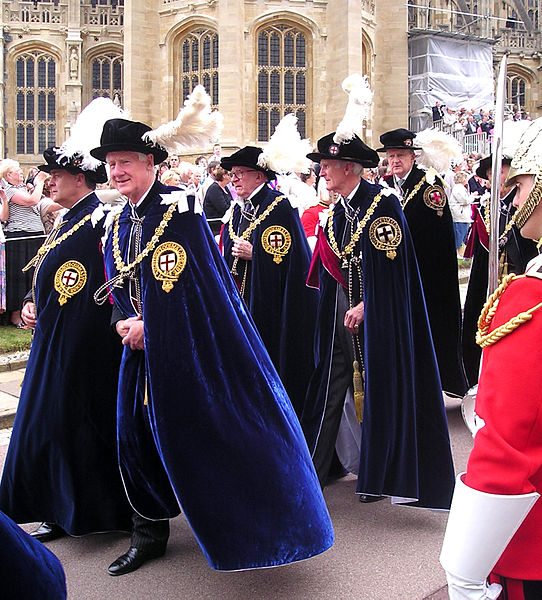
http://en.wikipedia.org/wiki/Order_of_the_Garter
http://www.royal.gov.uk/monarchUK/honours/Orderofthegarter/orderofthegarter.aspx

http://en.wikipedia.org/wiki/Order_of_the_Garter
Friday, October 5, 2012
A Survivor's Account of One of Grendel's Attacks
I woke up with a start. I hear his loud footsteps as he
comes stomping down the path to destroy us. Why does he feel it necessary to
destroy this beautiful meadhall and such a great race? What does he want? What
could he possibly-- BOOM! He had crashed through our great doors once again…
and is walking toward me. I do not want to die in this way, helpless and alone
under the cover of night. I want to die heroically in a great battle or-- Whew!
Luckily he turns to the left side of the hall and I am on the right. He is
heading toward the greatest and strongest warriors. It is as if he is trying to
mock us, showing us that even our strongest heroes cannot defeat him.
Almost every night he attacks us in this manner, and almost
every night I have watched the whole fight from start to finish, although he
believes us all to be asleep when he first attacks. It is always the same
thing: he comes flying through the door with a mean smirk on his horrible face
and attacks some sleeping victim who he will carry off into the night after he
has won. Before he leaves, some great warriors attempt to kill him, but it
never works. He probably takes his victims to his lair, wherever that is, and
eats them whole and drinks their blood for dessert. What a wretched beast!
CRASH! A shield is flying across the room! CRUNCH! CRUNCH! CRUNCH! Another victim
killed. Now the fun really begins!
The warriors group together and begin an offensive attack.
They have decided to attack with a long pointed spear, so as to pierce the
beast from afar. Other warriors are awake now and they are all gathering around
our ring-leader, preparing to fight. The beast is just watching us with a large
grin on his disgusting face. He has no idea what is coming for him! This night
will be different. There will be a victory for the Thanes! We have planned this
offensive for hours and it will work this time… I hope. The first group begins
the plan by creating a diversion while the second group prepares to attack.
Fortunately, I am in the third group so I have time to organize my thoughts--
CRUNCH! The first group is going down fast! We have angered the monster! All I
want to do is run away. There are no clear exits in sight. We really need more
doors in this place! CRUNCH! There goes another one. I can’t do this again.
This needs to end soon. A great warrior needs to rise up and defeat this
creature (not me, of course!). I don’t want to die tonight!
My group comes around from the back and begins our attack.
Many are wounded on the floor and others have been killed. I must fight in
front of my companions or else I will be shunned for life! Is no one else
frightened by this horrible monster and possible death? I can only pretend I am
not… The beast is now making some sort of weird cackling noise. It is a
battle-cry! He is preparing his own offensive attack! And now… the horrible
creature is smiling? He is picking up his victims and walking away. Has he
given up?! Are we done?! But no… he goes to one man and puts his claws straight
through him and carries him away. He will probably eat that one too. I am just
relieved that he left. I guess we won?
Wednesday, September 19, 2012
Comparing 10 new words in English with their French equivalents
1. Parliament- from French parlament
2. Theology- from French theologie
3. Plaintiff- from French pleintif
4. Peace- from French pais
5. Sergeant- from French sergent
6. Sapphire- from French saphir
7. Diamond- from French diamant
8. Poultry- from French pouletrie
9. Lettuce- from French laitues
10. Tragedy- from French tragedie
It seems that for the most part more letters were added to the words as they became English words. However, in some cases the endings became simpler. In two cases an -ie ending became a -y ending. Unusual (to English, of course) spellings and vowel combinations were also altered, such as in the case of poultry. Originally as pouletrie, there were many more vowels and it is unusual in English to have the sounds so spelled out as in the middle to end of the word (etrie). In this case, the word became simpler. Similarly, in the case of plaintiff unusual spellings were eliminated. In the English language the vowel combination "ei" is far less popular for the "ay" sound than the vowel combination "ai." Therefore the spelling was altered to create a more "English" spelling of the word, as was also done for lettuce.
http://www.etymonline.com/index.php
http://french.about.com/od/vocabulary/a/french-english-spelling-equivalents.htm
http://en.wikipedia.org/wiki/File:Origins_of_English_PieChart.svg

2. Theology- from French theologie
3. Plaintiff- from French pleintif
4. Peace- from French pais
5. Sergeant- from French sergent
6. Sapphire- from French saphir
7. Diamond- from French diamant
8. Poultry- from French pouletrie
9. Lettuce- from French laitues
10. Tragedy- from French tragedie
It seems that for the most part more letters were added to the words as they became English words. However, in some cases the endings became simpler. In two cases an -ie ending became a -y ending. Unusual (to English, of course) spellings and vowel combinations were also altered, such as in the case of poultry. Originally as pouletrie, there were many more vowels and it is unusual in English to have the sounds so spelled out as in the middle to end of the word (etrie). In this case, the word became simpler. Similarly, in the case of plaintiff unusual spellings were eliminated. In the English language the vowel combination "ei" is far less popular for the "ay" sound than the vowel combination "ai." Therefore the spelling was altered to create a more "English" spelling of the word, as was also done for lettuce.
http://www.etymonline.com/index.php
http://french.about.com/od/vocabulary/a/french-english-spelling-equivalents.htm
http://en.wikipedia.org/wiki/File:Origins_of_English_PieChart.svg

Wednesday, August 29, 2012
Modern Criticism of Frankenstein- Spivak
1. Shelley believed that an engineered society should not be based purely on one idea. It should involve "natural philosophy", "practical reason", and "aesthetic judgment" together to function properly (Spivak 264). Unfortunately, Frankenstein made his creation only out of natural philosophy while not including the other disciplines. This fact sheds a new light on the story. The monster never really had a chance to function properly in society. Besides his ghastly appearance, he did not have the knowledge of crucial principles in everyday life. Maybe this lack of understanding led him to feel the need for revenge.
2. Mary Shelley's parents were anti-evangelicals. This small fact about Shelley explains a lot about her story. She incorporates many religious aspects into the story. Spivak touches upon the human family the monster observes and the Arabian woman whose father was a Muslim but whose mother was a Christian. This whole section of the book, as Spivak explains, brings up many common views of the time about Muslims and Christians and makes a statement about the biased views of religion during this time period. Shelley intertwines religion throughout the whole book. She makes Victor a sort of "god-like" creator of life who possesses abilities that no mortal man has. She also discusses how Victor, although he thinks at first he has done something great, is actually an almost "anti-Christ" because of the destruction he has brought to the world in creating such a beast. This information about Shelley's past explains a lot about the whole story and many individual parts within it.
3. Spivak makes an interesting point in explaining how the monster is extremely complex; he is a monster on the outside, but really has many human qualities on the inside. He wants to be able to be a human, to be a functioning member of society. Frankenstein also tries to "humanize" him by telling his story to the magistrate and asking him to take action to bring him to justice. There are therefore many conflicts throughout the story about what the monster actually is. Clearly he wants to be human and at some points his creator even assists in making him seem so, but he can never fit into society. This view adds a new level of complexity to the monster. He is not just a monster, he possesses the ability to be so much more (at least in his own mind). This makes me sympathize a little more with his situation because it really is not his fault that he is not a human being and was created the way that he was.
2. Mary Shelley's parents were anti-evangelicals. This small fact about Shelley explains a lot about her story. She incorporates many religious aspects into the story. Spivak touches upon the human family the monster observes and the Arabian woman whose father was a Muslim but whose mother was a Christian. This whole section of the book, as Spivak explains, brings up many common views of the time about Muslims and Christians and makes a statement about the biased views of religion during this time period. Shelley intertwines religion throughout the whole book. She makes Victor a sort of "god-like" creator of life who possesses abilities that no mortal man has. She also discusses how Victor, although he thinks at first he has done something great, is actually an almost "anti-Christ" because of the destruction he has brought to the world in creating such a beast. This information about Shelley's past explains a lot about the whole story and many individual parts within it.
3. Spivak makes an interesting point in explaining how the monster is extremely complex; he is a monster on the outside, but really has many human qualities on the inside. He wants to be able to be a human, to be a functioning member of society. Frankenstein also tries to "humanize" him by telling his story to the magistrate and asking him to take action to bring him to justice. There are therefore many conflicts throughout the story about what the monster actually is. Clearly he wants to be human and at some points his creator even assists in making him seem so, but he can never fit into society. This view adds a new level of complexity to the monster. He is not just a monster, he possesses the ability to be so much more (at least in his own mind). This makes me sympathize a little more with his situation because it really is not his fault that he is not a human being and was created the way that he was.
Tuesday, August 28, 2012
Passage on page 32- Mary Shelley's attitude towards Frankenstein
Mary Shelley clearly shows her
mixed feelings about Victor’s creation in this passage. At first she shows her
amazement and admiration for Victor’s work by praising him and his
accomplishments. She basically makes him a “god-like” figure. Many believe that
only a higher power, such as a god, has the ability and power to create life. Victor
takes on this role in the passage. He describes how life and death are merely
“ideal bounds” (Shelley 32) and therefore shows his immense power. She also
describes him as a “creator,” (Shelley 32) reaffirming his god-like powers.
Shelley, in granting her character such abilities, goes against a widely-held
belief of the time: only a higher power could do what Victor did and create
life. Shelley shows that she has great respect for Victor in giving him such
gifts.
In
the second paragraph, Victor and Shelley both realize that they have created a
monster. In the first paragraph Victor calls himself a proud father who wants
to be involved in the life of his creation. However, once he realizes the sheer
horror of what he has done, he wants absolutely nothing to do with his
creation. He now calls his work “a filthy creation;” (Shelley 32) he no longer
feels pride in his great accomplishment. This contrast adds great complexity to
Victor’s character and exposes Shelley’s true feelings towards both Victor and the
monster. She knows she has unleashed this menacing beast on the world and no
longer approves of Victor’s work; she faces much difficulty in accepting that
what her character has created is so awful and real. In this paragraph she does
not make Victor seem god-like in any way. She now makes him seem almost
devil-like in unleashing this demonic creature on the world. In so deliberately
contrasting the emotions in these two paragraphs, Shelley adds great complexity
to Victor’s character and her attitude towards him. She makes a statement that
Victor does not possess any higher and respectable powers; he is not good at
all. He has done something truly evil.
Saturday, August 25, 2012
Blog entry #2- A memorable moment in Mary Shelley's Frankenstein
One moment that really stood out to me in Frankenstein was
when Victor Frankenstein found that his closest friend, Henry Clerval, had been
killed by his own creation. I remember reading the pages before he finds out about
Clerval’s death and wondering what the real significance was to the story. Why
was Shelley going into such great detail about this random small town that Victor
went to and why were its inhabitants so suspicious of him and so inhospitable
towards him? Was it really necessary to discuss this one detour Frankenstein
took? What were the odds that Frankenstein would have to deal with yet another
horrible situation? I was clearly being too naïve and optimistic about
Frankenstein’s situation. I remember then feeling filled with dread as I
realized this town’s tragedy probably did have some significance to the story
and to Frankenstein himself, obviously. I began to wonder about who would
suffer next, but I did not ever suspect that Frankenstein would have to face
such a tragic loss or that Clerval had been murdered by the monster. I
suspected that maybe Frankenstein looked like the criminal the town was after
and would merely be placed in jail for a little while. I wondered if possibly
some random man who looked like he would have been associated with Frankenstein
but who actually had no connection to him whatsoever had been murdered. I
thought that maybe the monster had killed an innocent man who could not bear to
look at his demonic face and was killed because of his fears. I was again being
far too optimistic, but how was I to know that such horrible events were about
to occur! I just didn’t want this poor man to have to suffer any more, as
childish as that sounds. I honestly was moved most by this scene because I
genuinely felt bad for Victor. Victor says in the book, "The human frame
could no longer support the agonizing suffering that I endured" (Shelley
122). It was at this point in the book that I myself could no longer endure the
horrific amount of suffering this one man faced. I felt a new sense of sympathy
towards Victor. Clerval had been such a central figure in his life and was one
whom he even considered a part of his family. I could not even begin to imagine
the amount of pain he must have been in after finding him dead. I also felt
that this moment began a huge shift in the book. Although Frankenstein had been
depressed before, now he truly wanted to be dead. I could only hope that
the next chapters would be happier, but I now knew that this one sad man would
never truly feel happiness again.
Wednesday, August 22, 2012
Blog Assignment #1- Most memorable books
1. The Kite Runner, Khaled Hosseini. I read this book when I was 14. I was so moved by the stories and became very connected to the characters. I didn't want to put it down!
2. The Amazing Adventures of Kavalier & Clay, Michael Chabon. Although I had to read this book for my ID Paper, I still loved it! I liked reading about the Holocaust from the perspective of Jews in America.
3. All of the Harry Potter books, J. K. Rowling. I began reading this series the summer before my sophomore year while I was at camp. They scared me a lot at first and I even put away the books for a few months, but when I picked them back up I couldn't stop reading. It ended up taking me almost a full year to read all seven, but it was one of the best decisions I have ever made. They influenced me in uncountable ways. Literally obsessed.
4. Memoirs of a Geisha, Arthur Golden. I don't know why, but I loved this book. It was fascinating to read about such a different culture.
5. Flowers for Algernon, Daniel Keyes. I read this book some time during my middle school years and loved it. The story is amazing.
6. The Scarlet Letter, Nathaniel Hawthorne. I read this for an English project last year and discussed corruption in the book. It is definitely a classic for a reason.
7. 1984, George Orwell. I read this this past summer. It was amazing to me how correct Orwell was in some of his predictions about the future.
8. Wild, Cheryl Strayed. It took me a while to finish this book, but it was amazing. Her story is unbelievable and I truly admire her strength and persistence.
Subscribe to:
Posts (Atom)